
Halal Sports Nutrition vs Non-Halal Supplements Explained


Last Updated: 19 November 2026
Quick Summary
Halal sports nutrition is made without pork, alcohol or other prohibited substances, and produced under conditions that avoid cross-contamination. The difference from non-halal supplements lies in ingredient sourcing, capsule and processing aids, and verified manufacturing controls, not in performance. Halal-certified products usually cost slightly more per serving to cover certification.
- Check that the seal names a recognised certification body and that the batch number matches the certificate.
- Creatine is generally halal when synthetically produced; the capsule shell and carriers are the real concern.
- Whey protein is halal under Hanafi rulings when the whey comes from permissible milk with no non-halal processing aids.
- Halal certification confirms religious compliance only, not performance or anti-doping safety.
- Look for plant-based or fish gelatine capsules rather than bovine or porcine gelatine.
Table of Contents
- Halal Sports Nutrition vs Non-Halal Supplements: The Core Differences
- Is Creatine Halal or Haram? What You Need to Know
- Is Whey Protein Halal Hanafi? Protein Powder Suitability
- Halal Sports Nutrition Certification and How to Verify It
- Frequently Asked Questions
Halal Sports Nutrition vs Non-Halal Supplements: The Core Differences
Halal sports nutrition is a category of supplements made without pork, alcohol or other prohibited substances, and produced under conditions that avoid cross-contamination. The global halal nutraceuticals market is valued at roughly USD 42 billion, according to Muslim Ad Network's market analysis, and it is growing fast. A common question is what actually separates a halal-certified product from a standard one. The short answer is ingredient sourcing, capsule and processing aids, and verified manufacturing controls. These sourcing and manufacturing checks are part of the wider question of fitness supplements quality, which also depends on how consistently products are made.
| Feature | Halal-Certified Supplements | Non-Halal Supplements |
|---|---|---|
| Ingredient sourcing | Animal-derived ingredients must come from permissible sources | May contain gelatine, collagen or enzymes from any source |
| Capsule material | Often plant-based or fish gelatine | Frequently bovine or porcine gelatine |
| Production lines | Segregated or cleaned to avoid cross-contamination | No halal-specific controls |
| Verification | Third-party certification seal | Manufacturer's word only |
| Cost | Usually slightly higher for certification | Often cheaper per serving |
The biggest mistake shoppers make is assuming "natural" means halal. A whey protein can be perfectly natural and still fail halal requirements if the production line also handles porcine gelatine capsules.
Is Creatine Halal or Haram? What You Need to Know
Creatine is generally considered halal when produced synthetically or from permissible sources. Most creatine monohydrate sold today is made in a lab through chemical synthesis, removing animal contact from the active ingredient. According to research published by the National Centre for Biotechnology Information, synthetic compounds produced through chemical processes carry a minimal risk of non-halal contaminants compared with animal-derived ingredients. For a British shopper, the practical question is not the creatine molecule but everything around it: the capsule shell, flavour carrier, anti-caking agent and the line it was run on.
| Consideration | Halal-certified creatine | Non-halal creatine |
|---|---|---|
| Active ingredient | Synthetic creatine monohydrate, typically identical to non-halal product | Synthetic creatine monohydrate |
| Capsule shell | Plant-based (HPMC) or fish gelatine | Often bovine or porcine gelatine |
| Flavour carriers | Audited for alcohol and animal-derived carriers | May use gelatine-based or alcohol-based carriers |
| Line controls | Segregated or validated cleaning between runs | No halal-specific controls |
| Efficacy | No evidence that halal status changes performance | No evidence that non-halal status improves performance |
| Typical cost | Slightly higher per serving to cover certification | Often cheaper per serving |
What changes between categories is the excipients and the assurance of sourcing, not the creatine itself.
For UK buyers, check that the seal names a certification body with a published standard and a searchable certificate, and that the batch number on the tub matches the certificate. If a product has no seal, ask the manufacturer directly for the source of the capsule shell and any flavour carriers.
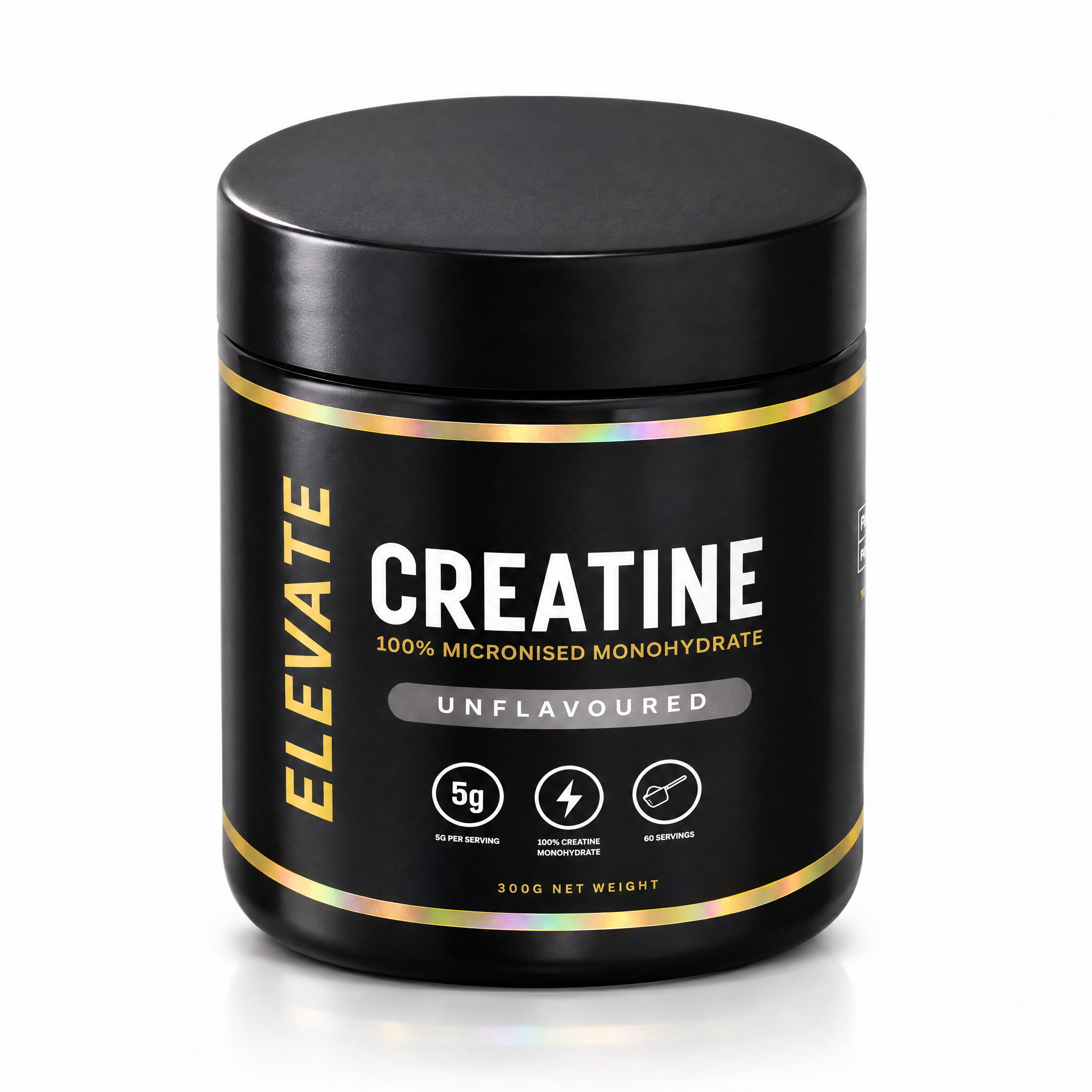
Our Elevate Creatine Monohydrate is 100% micronised creatine with no fillers or blends. For the full science on dosing and safety, read our guide on what creatine is and how it works.
Is Whey Protein Halal Hanafi? Protein Powder Suitability
Whey protein is halal under Hanafi rulings when the whey comes from permissible milk and no non-halal processing aids are used. Whey is a dairy by-product, not meat, so the milk source is the deciding factor. The complication is the processing line: some powders use porcine-derived enzymes or share equipment with gelatine capsules, and some flavoured variants use alcohol-based carriers. Brands that design specifically for halal consumers, as Business Research Insights notes, are increasingly separating these lines.
| Consideration | Halal-certified whey | Non-halal whey |
|---|---|---|
| Protein source | Whey from permissible milk, typically concentrate or isolate | Whey from any milk source |
| Processing aids | Audited for non-halal enzymes and carriers | May use porcine-derived enzymes or alcohol-based carriers |
| Capsule or scoop format | Plant-based or fish gelatine where encapsulated | Often bovine or porcine gelatine |
| Line controls | Segregated or validated cleaning | No halal-specific controls |
| Efficacy | No evidence that halal status changes protein quality | No evidence that non-halal status improves results |
| Typical cost | Slightly higher per serving to cover certification | Often cheaper per serving |
On efficacy, the relevant measure is protein content and amino acid profile, not halal status. Halal-certified whey can meet that target just as well as a non-halal product; the difference is in the assurance around excipients and sourcing.
For British buyers, confirm the seal names a certification body with a published standard and a searchable certificate, and that the batch number on the tub matches the certificate. Check the ingredient list for gelatine, collagen, L-cysteine and alcohol-based flavourings, and confirm the capsule material is plant-based or fish gelatine where capsules are used.
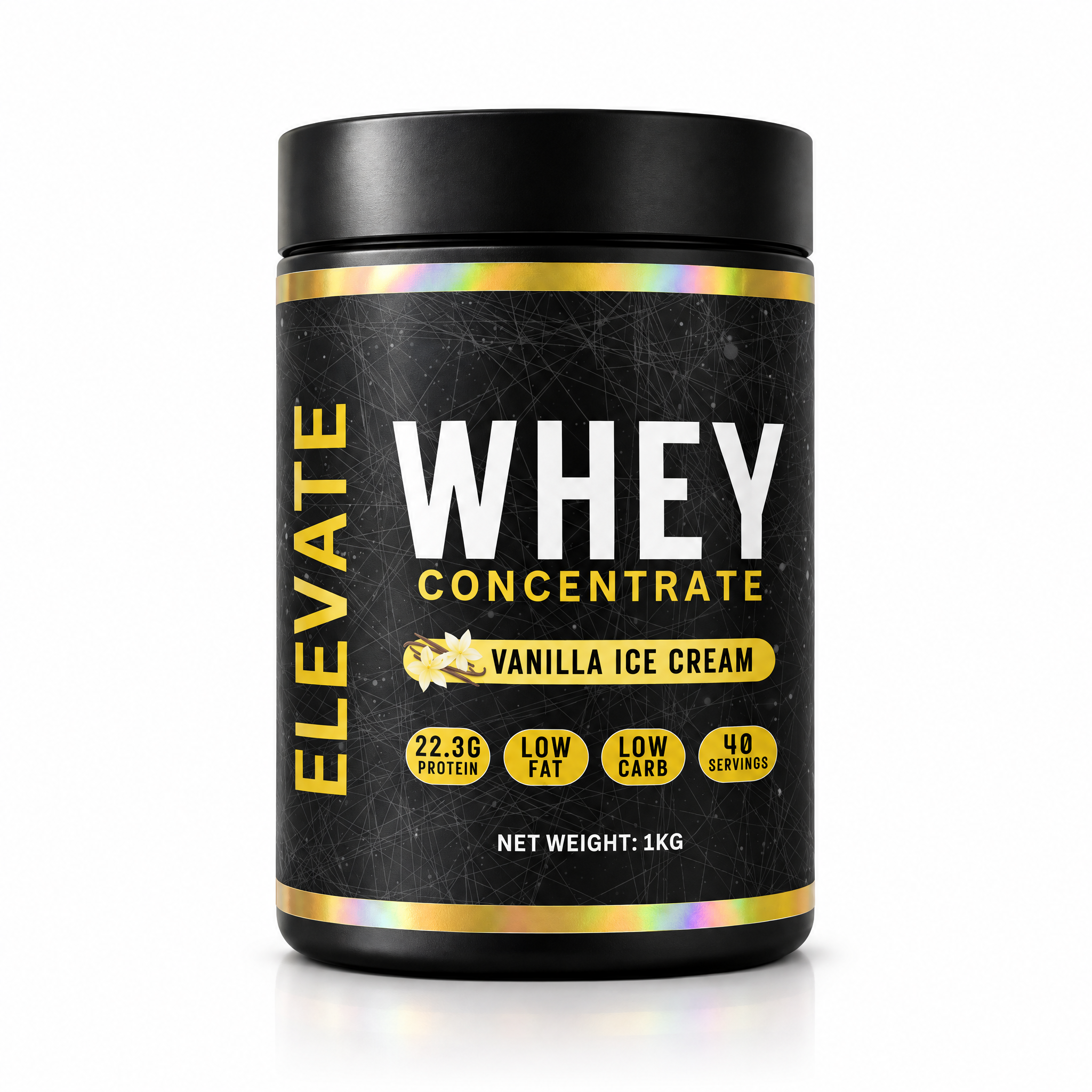
Our Elevate Whey Protein delivers 22.33g of protein per scoop with 1.2g carbs and 1.13g fat. For a deeper look at concentrate versus isolate, see our whey protein explained guide.
Halal Sports Nutrition Certification and How to Verify It
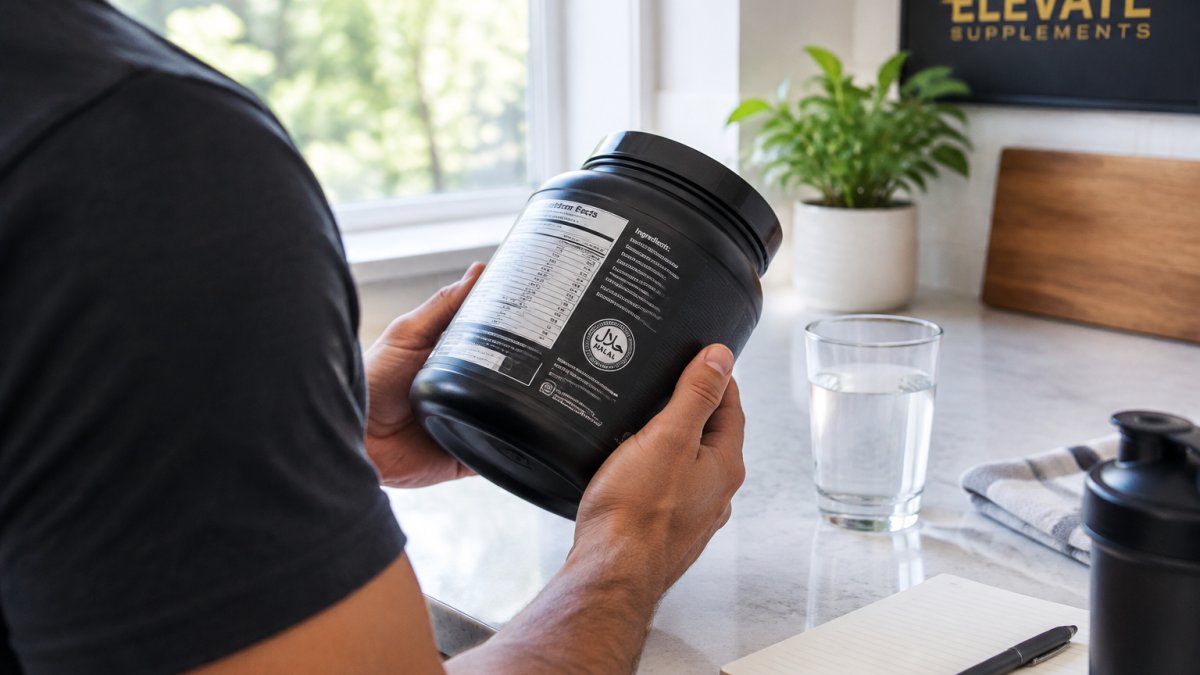
Halal sports nutrition certification is third-party verification that a product's ingredients, facility and production process meet halal standards. A seal is only as good as the body behind it, so check which certifier issued it and whether that certifier is recognised in your market.
Use this checklist before you buy:
- Confirm the seal names a recognised halal certification body
- Check the ingredient list for gelatine, collagen, L-cysteine and alcohol-based flavourings
- Look for a batch number that matches the certificate
- Verify the capsule material is plant-based or fish gelatine
- Contact the brand directly if the seal is unclear
Certification is not proof of performance or anti-doping safety. A halal seal tells you about religious compliance, not whether a product will make you faster. For guidance on choosing quality supplements safely, read our sports supplementation guide.
The real challenge is finding certified products that also deliver on quality and price. Elevate Supplements is a UK-based brand with GMP, HACCP and ISO certification alongside our halal certification, so you can check every claim on the label. Our ranges cover protein, creatine, amino acids and hydration, all built for athletes who want to train hard without compromising on their values. Get started with Elevate Supplements and shop certified sports nutrition you can actually trust.
Frequently Asked Questions
Is creatine halal or haram?
Creatine monohydrate is usually synthesised in a laboratory rather than extracted from animal tissue, and synthetic production carries a minimal risk of non-halal contamination compared with animal-derived ingredients, according to 2023 research published by the National Centre for Biotechnology Information. That means most pure creatine powders are permissible, but the finished product still needs checking: flavourings, capsules and anti-caking agents can introduce questionable ingredients. Look for a halal certification seal on the tub and a short ingredient list, such as a pure micronised creatine with no fillers.
Can whey protein contain non-halal ingredients?
Yes. Whey itself is a dairy by-product, but the risk sits in everything around it. Flavouring systems, emulsifiers, thickeners and capsule shells can contain gelatine or other animal derivatives, and shared production lines can introduce cross-contamination. Hanafi scholars generally accept whey protein where the processing involves no prohibited substances, so the practical step is to check the ingredient list and confirm the product carries a recognised halal sports nutrition certification rather than relying on the word whey alone.
Are halal supplements healthier than non-halal supplements?
Not automatically. Halal certification confirms that ingredients and production meet religious requirements, not that the product performs better or contains fewer calories. Some halal-certified supplements are marketed as having no questionable fillers or artificial additives, which can appeal to buyers wanting a cleaner profile, but the nutritional value still depends on the formula. Compare protein per scoop, carbohydrate and fat content, and serving size. A certified product with 22g of protein per scoop and low carbs and fat does more for recovery than an uncertified one with a longer ingredient list.


