
How to Choose the Best Third Party Tested Protein Powder


Last Updated: October 30, 2026
Quick Summary
The best third party tested protein powder is one where an independent laboratory, unconnected to the manufacturer, has screened for contaminants such as heavy metals, banned substances, allergens or microbes, with results you can check. Verify the exact product and flavour on the certifying body's own database, and read the scope of the claim rather than the logo.
- Informed Sport and Informed Protein are batch-testing programmes run through the LGC Group.
- NSF Certified for Sport screens for banned substances, verifies label claims and audits the facility.
- Consumer Reports found most of 23 tested powders and shakes contained high levels of lead.
- For plant proteins prioritise heavy-metal screening; for whey prioritise finished-product testing.
- Elevate Whey Protein is GMP, HACCP, ISO and Halal certified, with 22.33g of protein per scoop.
Table of Contents
- Why Third Party Tested Protein Powder Matters
- Protein Powder Certifications: What the Marks Actually Mean
- NSF Certified for Sport Protein Powder: The Gold Standard for Athletes
- Protein Powder Heavy Metal Testing: What the Data Shows
- Whey Protein Versus Plant Protein Powder: Which Passes Testing Best?
- Choosing Your Third Party Tested Protein Powder
- Frequently Asked Questions
Why Third Party Tested Protein Powder Matters
Most protein tubs carry a purity claim of some kind. Independent testing has repeatedly found contaminants in popular products: independent testing has reported high levels of lead in a number of protein powders.
Below, we break down what each certification mark verifies, where testing falls short, and how to compare whey and plant options on test status rather than price.
Protein Powder Certifications: What the Marks Actually Mean
Certification is a claim with a checking process behind it. A mark means a named programme has verified something specific, so ask: verified what, by whom, and does it cover the batch in your hand?
The main marks you will see on UK shelves and listings fall into a few groups, and each answers a different question:
- Informed Sport and Informed Protein: run through the LGC Group, these are batch-testing programmes. Informed Sport screens for substances banned in sport and publishes a searchable list of certified products and batches; Informed Protein adds verification of protein content per serving. The limitation is scope: they target banned substances and protein quantity, not heavy metals, allergens or microbial contamination unless separately stated.
- NSF Certified for Sport: screens for banned substances, verifies label claims, and audits the facility. NSF publishes a searchable database of certified products, including protein lines, so you can confirm the exact product and flavour before you buy. Its focus is sport-relevant contamination and label accuracy, not a comprehensive heavy-metal screen.
- GMP, HACCP and ISO: facility and process standards covering how the product is made, not what is in the finished scoop. A GMP certificate tells you the factory follows good manufacturing practice; it does not tell you the whey inside is free of cadmium.
- Halal certification: confirms the product and its production meet Halal requirements, audited by a recognised certifying body. This is a religious-compliance mark, not a contaminant-testing mark.
A logo can create a false sense of comprehensive safety: a product can carry a banned-substance certification and still be worth examining on heavy metals. For the wider picture, see our guide to clean label supplementation and why it matters.
Certification, Batch Testing and a Certificate of Analysis
These three terms get used interchangeably. They are not the same, and treating them as equivalent is how readers end up trusting a logo that verifies less than they assume.
Certification is programme-level. A certifying body audits the producer and, depending on the scheme, tests batches on an ongoing basis.
Batch testing is product-level. A specific lot is sent to a lab and screened.
A certificate of analysis (CoA) is the document a lab issues after testing, listing what was tested, the method and the results.
For UK readers, protein powders are regulated as food supplements or foods, and labels must comply with UK food labelling rules. A certification mark is not a substitute for reading the label: check protein content per serving, the ingredient list, and allergen statements. If a brand claims "third party tested" without naming the scheme, the laboratory, or the contaminants screened, treat it as an unverified statement rather than evidence.
Ask which scheme covers the tub in your hand, what it actually tests for, and whether results are published per batch.
NSF Certified for Sport Protein Powder: The Gold Standard for Athletes
For competitive athletes, NSF Certified for Sport is the benchmark to beat.
The practical rule for any athlete: if your sport tests, buy only products on a recognised certified list, and verify the exact product and flavour on the certifying body's database.
That said, certification is not a purity guarantee. It is a screening programme with defined scope. A product can pass a banned-substance screen and still be worth examining on heavy metals.
Protein Powder Heavy Metal Testing: What the Data Shows
Heavy metal testing is the area where independent data has been most uncomfortable. The Clean Label Project's protein study reported positive results for arsenic, cadmium, lead and mercury across the products it tested.
Elevate Whey Protein | High Protein Formula - Vanilla Ice Cream 1kg →
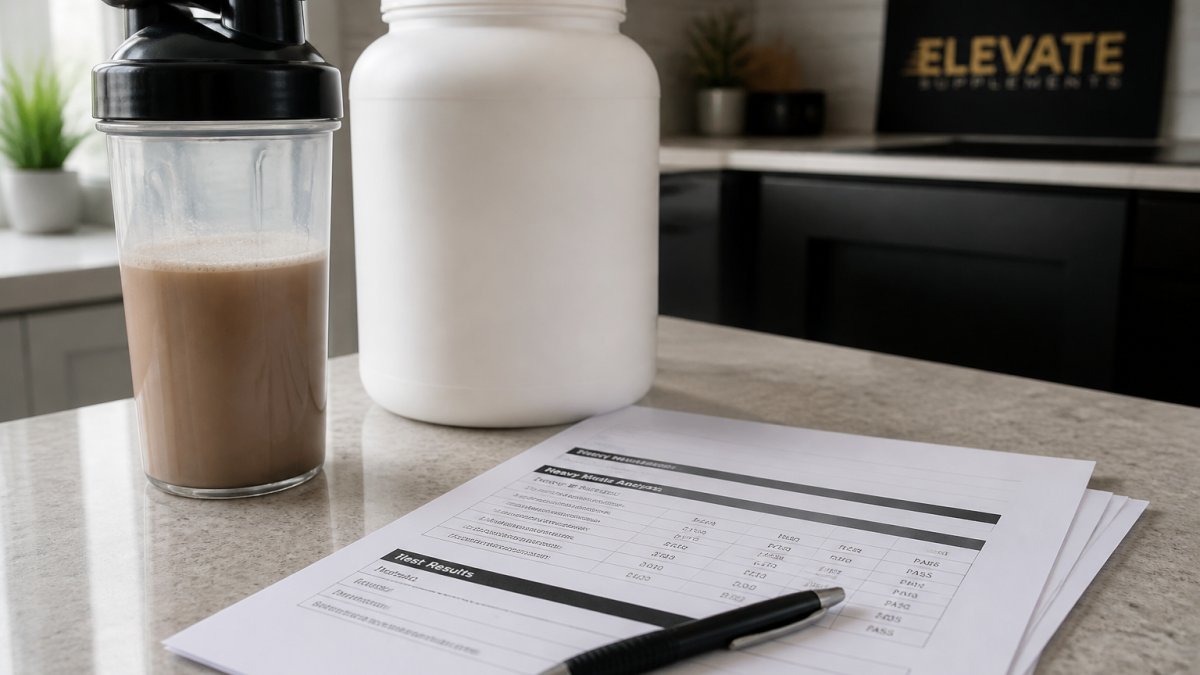
Two lessons follow. First, plant-based proteins are not automatically cleaner. Second, a general "tested" claim does not tell you which contaminants were screened, at what limits, or with what result.
What should you check? Our guide to why supplement quality matters for athletes goes further into how quality failures show up in performance and recovery.
Whey Protein Versus Plant Protein Powder: Which Passes Testing Best?
Neither wins outright, but they fail differently.
Whey is a dairy by-product. If you are weighing up whey specifically, our guide to whey protein types, benefits and how to use them sets out the differences between concentrate, isolate and hydrolysate.
Plant proteins, particularly rice and pea, come from crops grown in soil, and plants can take up metals such as cadmium and lead during growth.
In practice, when you read a testing claim for a plant protein, look specifically for heavy-metal screening, not just a banned-substance logo.
Brands often test for the category their audience cares about most: sport-focused brands test for banned substances, while general health brands may test for heavy metals.
For anyone with a sensitive gut, the protein source is only half the story.
Choosing Your Third Party Tested Protein Powder
Use this checklist before you buy, in order. It takes about five minutes and it filters out most of the noise.
- Identify the certification scheme, not just the logo
- Verify the exact product and flavour on the certifying body's database
- Check which contaminants were tested: heavy metals, banned substances, allergens, microbes
- Confirm the testing is batch-level and current, not a single historic report
- Read the full ingredient list for fillers, sweeteners and flavourings
- Check protein per serving and cost per serving, not just tub price
- Confirm Halal status with the certifying body if that matters to you
| What to check | Why it matters | Where to verify |
|---|---|---|
| Certification scheme | Defines what was actually tested | Certifying body's database |
| Contaminants screened | Banned-substance tests miss heavy metals | Testing claim and CoA |
| Batch coverage | One good batch does not cover the next | Published per-batch results |
| Protein per serving | Sets the real cost per gram of protein | Nutrition panel |
| Ingredient list | Shorter lists suit sensitive digestion | Product label |
Elevate Whey Protein is GMP certified, HACCP certified, ISO certified and Halal certified, and the Elevate brand is UK based. Each 1kg tub of Elevate Whey Protein in Vanilla Ice Cream delivers 22.33g of protein per scoop with 1.2g of carbs and 1.13g of fat, across 40 servings, priced at £28.99.

Watch out: cost per serving is where cheap tubs lose their advantage. A larger, cheaper tub with a lower protein dose per scoop can cost more per gram of protein than a smaller premium one. Do the division before you decide.
Frequently Asked Questions
What does third-party testing mean for protein powder?
Third-party testing means a laboratory independent of the brand analyses the powder for contaminants or label accuracy. The best third party tested protein powder will carry a recognised mark, such as NSF Certified for Sport, or publish a certificate of analysis per batch. Testing is not a guarantee of zero contaminants, but it adds a layer of verification you cannot get from a label claim alone. Always check the certifier's own searchable database rather than trusting a logo on the tub.
Which certifications should I look for on a protein powder?
Look for protein powder certifications from recognised bodies, such as NSF Certified for Sport for banned-substance screening. For manufacturing, GMP, HACCP and ISO certificates show the facility meets food-safety standards. Each mark covers a different risk, so a product with several relevant certifications is easier to trust than one with a single generic claim.
Is third-party-tested protein powder worth the extra cost?
It depends on how often you use it and what you are managing. Independent testing has reported high levels of lead in some protein powders, so testing is not a marketing extra. For daily users, athletes subject to doping control, or anyone with allergies, paying more for a verified product is usually sensible. Compare cost per serving rather than tub price, and check whether the certification covers the specific risk you care about.
How can I check whether a protein powder has been independently tested?
Start with the certifier's website. Certifying bodies such as NSF publish searchable listings of certified products. Match the exact product name and flavour against the listing, because certification can vary between variants. If the brand mentions a certificate of analysis, ask for the batch number and the laboratory name. A genuine certificate will show test dates, analyte results and the lab that performed the work.
The supplement shelves reward bold claims and punish quiet verification. Our challenge to you is simple: apply the checklist above to whatever tub is in your cupboard right now, and see how many boxes it ticks. Elevate Supplements exists to make that easier, with GMP, HACCP, ISO and Halal certified products, a 5-star food hygiene rating, and transparent pricing that holds up per serving. Get started with Elevate Supplements and build your protein intake on evidence rather than adjectives.


