
How to Choose a Calorie Dense Protein Powder


Quick Summary
A calorie dense protein powder delivers more energy per scoop, usually from added carbohydrates and fats alongside the protein. To choose one, compare calories and grams of protein per serving on the nutrition panel, check the serving size, and read the ingredients for added sugars.
- Compare calories and protein per serving, not per 100g, to judge a powder fairly.
- Divide calories by protein grams; a lower ratio means a more protein-focused powder.
- Check the serving size, since two tubs can differ greatly in calories per scoop.
- Look near the top of the ingredients for added sugars, which add calories with little nutrition.
- Increase oats or nut butter gradually to avoid digestive discomfort.
Table of Contents
- What Makes a Protein Powder Calorie Dense?
- Reading the Label: Calories and Protein Per Serving
- A Practical Calorie-to-Protein Selection Method
- Mass Gainers Versus Standard Protein Powders
- Best High-Calorie Protein Powder for Weight Gain: What to Look For
- Protein Powder Ingredients to Avoid
- Choosing Your Next Protein Powder With Confidence
- Frequently Asked Questions
What Makes a Protein Powder Calorie Dense?
A calorie dense protein powder packs a high number of calories into each scoop, usually through added carbohydrates and fats alongside the protein. Most standard whey powders deliver around 100 to 130 calories per serving, while a calorie-dense option can deliver considerably more. The difference lies in what else is in the tub, not in the protein itself.
Calorie density matters most for people who struggle to eat enough, and a calorie dense protein shake can help those trying to gain weight or build muscle. Adding a shake can be an easier way to increase energy intake than preparing another full meal. That said, calories from a powder should still come from ingredients you can account for on the label.
Protein is essential, but it is not the only thing that drives energy intake. Johns Hopkins describes ultra-processed foods as calorie-dense but not nutrient-dense, a caution worth keeping in mind when judging a high-calorie powder's overall nutritional quality (Johns Hopkins Bloomberg School of Public Health, America's Protein Obsession, Explained). A powder that is high in calories is not automatically a better product.
Reading the Label: Calories and Protein Per Serving
The nutrition panel is the most reliable place to judge a calorie-dense powder, but British labels can be laid out differently from American ones. In the UK, you will usually see values per 100g and per serving, so always check which column you are reading. A powder that looks high in calories per 100g may deliver far fewer per scoop if the serving size is small.
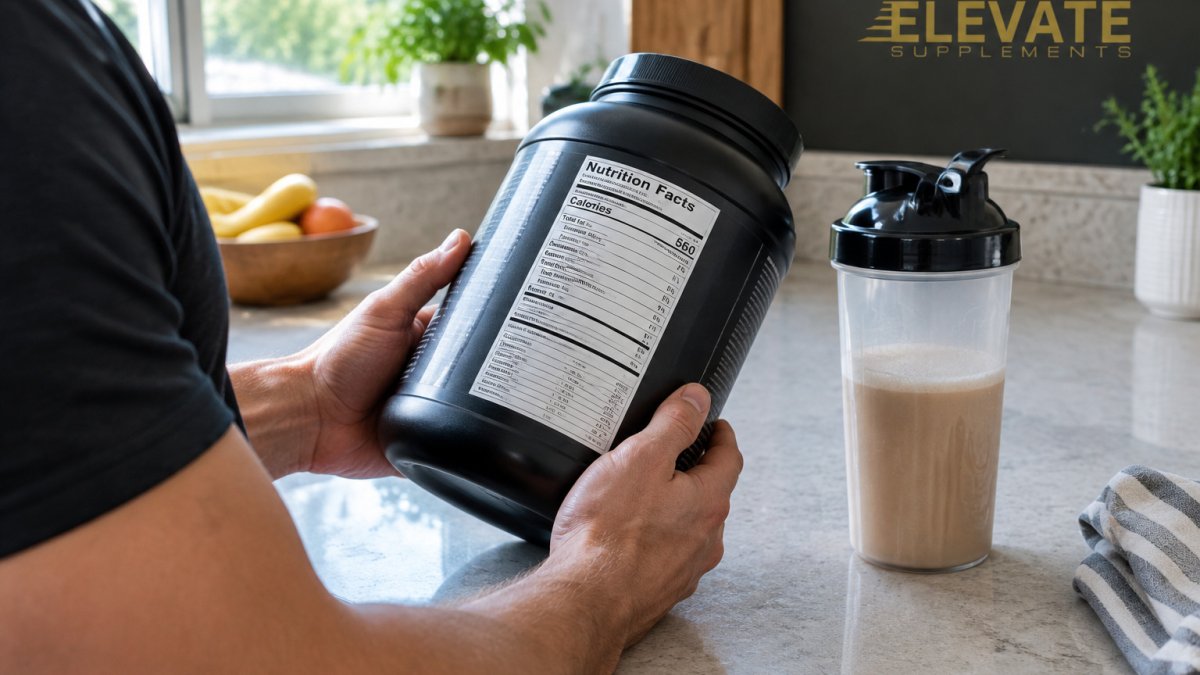
Check three numbers first: calories per serving, grams of protein per serving, and serving size. Divide the calories by the protein to see how much energy you get for each gram of protein. For example, a powder with 200 calories and 20g of protein gives 10 calories per gram of protein, while one with 150 calories and 25g of protein gives 6 calories per gram. The lower the figure, the more protein-focused the powder; the higher the figure, the more it leans on carbohydrates and fat for energy.
Serving size is where many shoppers get caught out. Two tubs can list very different calorie counts simply because one uses a larger scoop. Always compare the per-serving figures, then work out how many servings a day you actually plan to use. If a label only gives per-100g values, multiply by the serving size in grams and divide by 100 to get the per-serving figure.
Look also at carbohydrates, fat and added sugars. Carbohydrates and fat are the usual sources of extra calories in a high-calorie formula. Added sugars can push the total up without contributing much to nutrition, so a lower figure here is generally better. In the UK, ingredients are listed in descending order by weight, so if sugar or a syrup appears near the top, the product is likely to be high in added sugar.
Allergen information is another key check. UK labels must highlight the 14 major allergens in the ingredients list, usually in bold. If you are avoiding lactose or following a plant-based diet, look for clearly stated terms such as "milk" or "soyaa" rather than relying on front-of-pack claims. A powder labelled "dairy-free" should still be checked for may-contain warnings if you have a severe allergy.
Watch out: Do not judge a powder by its front-of-pack claims alone. Always check the per-serving figures against the nutrition panel before buying.
The table below pulls together the label checks described in this section, so you can scan what to look for on each part of the nutrition panel.
| Label item | What to check | Why it matters |
|---|---|---|
| Calories per serving | Compare the per-serving figure | Shows the energy each scoop adds |
| Protein per serving | Grams of protein per serving | Shows how much protein you get |
| Serving size | Confirm the scoop size | Two tubs can differ greatly in calories |
| Calories per gram of protein | Divide calories by protein | A lower figure means more protein focus |
| Carbohydrates and fat | Check both values | These are the usual extra calorie sources |
| Added sugars | Look near the top of the ingredients | Adds calories with little nutrition |
| Per 100g values | Multiply by serving grams, divide by 100 | Gives the per-serving figure on UK labels |
| Allergens | Check the 14 major allergens | UK labels highlight them, often in bold |
A Practical Calorie-to-Protein Selection Method
Here is a simple way to shortlist powders. First, decide roughly how many extra calories you need per day. Second, decide how much protein you want from the shake. Third, compare labels using the ratio of calories to protein per serving.
A lower ratio means more protein for each calorie. A higher ratio means the powder leans more on carbohydrates and fat for its energy. Neither is wrong, but your goal should decide which one suits you. If you want energy with a strong protein focus, aim for the lower ratio. If you need maximum calories in a small volume, a higher ratio may suit you better.
Watch out: Do not judge a powder by its front-of-pack claims alone. Always check the per-serving figures against the nutrition panel before buying.
Mass Gainers Versus Standard Protein Powders
A mass gainer is a powder designed to deliver a large number of calories per serving, usually with a significant carbohydrate content. A standard whey protein is designed mainly to provide protein, with fewer calories. Both can have a place, depending on what you need, but you do not have to buy a mass gainer to increase calories.
Mass gainers suit people who find it hard to eat enough and want a concentrated source of energy. Standard protein powders suit people who already eat enough and just want to add protein. If you are unsure which applies to you, compare the labels and work out how many calories the powder adds to your normal intake.
A practical alternative is to use a standard protein powder as a base and add calorie-dense ingredients yourself. This gives you control over the ingredients and allows you to adjust the total easily. Here are three example combinations using a standard whey powder:
- Milk-based shake: 30g whey powder mixed with 300ml whole milk. The powder adds roughly 120 calories and 24g protein; the milk adds around 190 calories and 10g protein. Total: approximately 310 calories and 34g protein.
- Oat and nut butter shake: 30g whey powder, 40g oats, 15g peanut butter and 250ml water. The powder adds about 120 calories; the oats add around 150 calories; the peanut butter adds roughly 90 calories. Total: approximately 360 calories and 30g protein.
- Yoghurt and fruit shake: 30g whey powder blended with 150g Greek yoghurt and 100g banana. The powder adds about 120 calories; the yoghurt adds around 130 calories; the banana adds roughly 90 calories. Total: approximately 340 calories and 32g protein.
These totals are estimates and will vary by brand, but they show how a standard powder can become calorie-dense without a dedicated mass gainer. Adjust portion sizes to suit your needs: add more oats or nut butter for extra calories, or use water instead of milk to keep the total lower.
Watch out: Adding large amounts of high-fibre ingredients such as oats too quickly can cause digestive discomfort. Increase portions gradually over a week or two to see how you tolerate them.
Best High-Calorie Protein Powder for Weight Gain: What to Look For
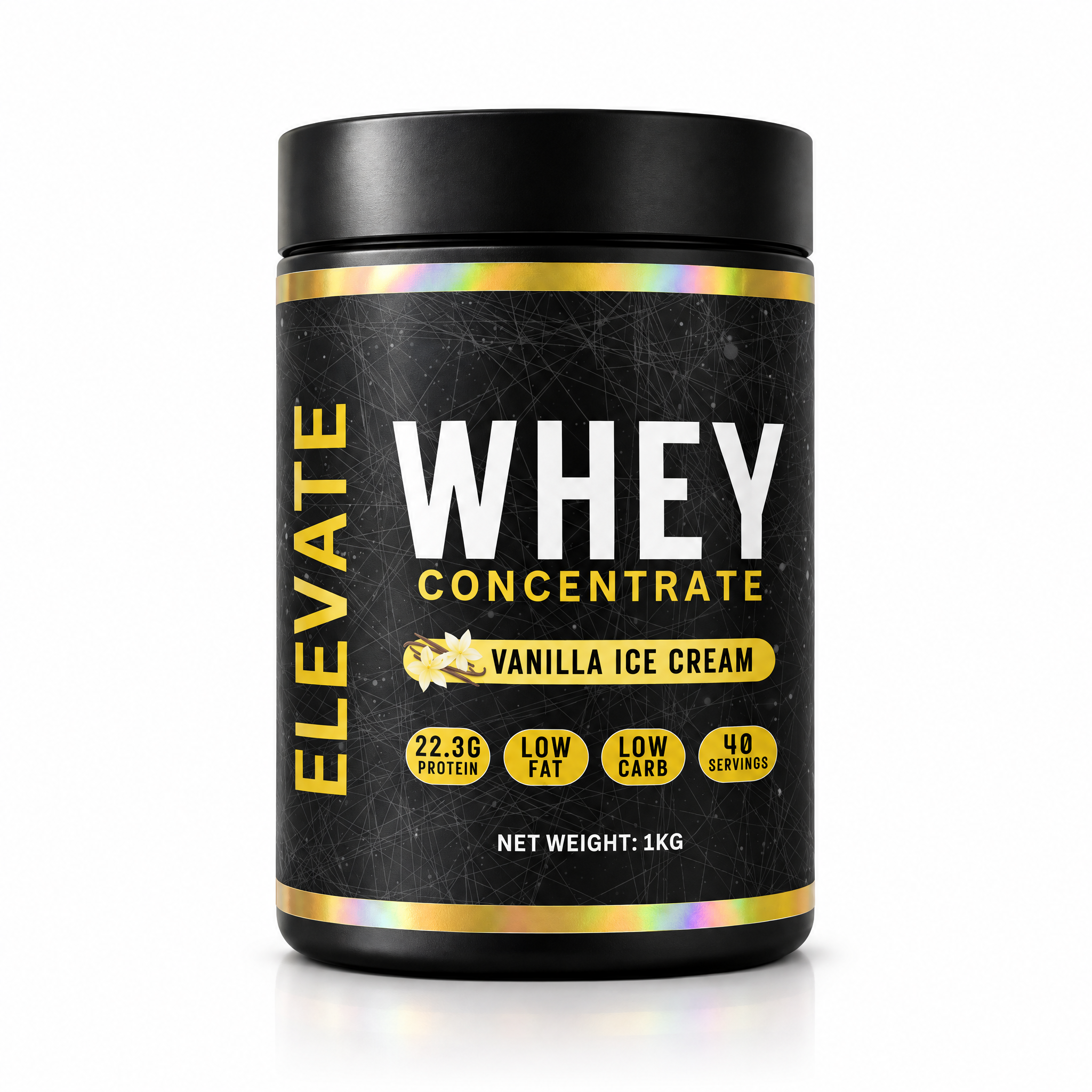
When choosing a powder for weight gain, look for a clear calorie figure per serving, a reasonable protein content, and an ingredient list you understand. Elevate Whey Protein in Vanilla Ice Cream gives 22.33g of protein per scoop for around 132 calories, with 1.2g of carbohydrates, 1.13g of fat and 0.4g of sugar per serving.
If you need more calories, pair a standard whey with oats, nut butter or milk rather than relying on the powder alone. The Elevate Whey Protein | Vanilla Ice Cream 1kg is a good starting point for comparing per-serving figures.
Protein Powder Ingredients to Avoid
Read the full ingredient list before buying, not just the front label. Be cautious of long lists of fillers, unclear "proprietary blends" that hide individual amounts, and products that do not state their protein or calorie content clearly.
Independent testing can show whether a product contains what its label says. Our guide on How To Choose Best Third Party Tested Protein Powder explains what to look for, and What Is a Certificate of Analysis for Supplements? covers what the document shows.
Watch out: Added sugars and artificial sweeteners can change how a shake tastes and how your digestion responds. If your stomach is sensitive, introduce a new powder gradually.
Choosing Your Next Protein Powder With Confidence
Start with your calorie and protein goals, then compare labels using the ratio method above. Check serving sizes, read the ingredient list, and look for independent testing before you commit. Calorie-dense powders can be a practical tool, but they work best alongside a balanced diet.
If you are reading a Mass Gainer Guide for Skinny Guys or comparing Best Mass Gainer For Skinny Guys options, use the same label checks throughout. Our team at Elevate Supplements can help you compare what fits your goals.
Frequently Asked Questions
What is the most calorie-dense protein powder?
There is no single most calorie-dense protein powder, because the figure depends on the brand and formula. Mass gainers and some blended powders with added carbohydrates or fats can exceed 400 calories per serving, while standard whey isolates and concentrates usually sit closer to 100 to 150 calories. Check the calories per serving on the nutrition label, then compare the figure against the protein per serving so you can see how much of the energy comes from protein rather than sugar or fat. Elevate Whey Protein provides 131.65 calories and 22.33g of protein per scoop.
What should I look for in a protein powder for weight gain?
Look for a powder with a clear calories-per-serving figure, a meaningful protein content, and a carbohydrate and fat profile that fits your daily target. For weight gain, a higher-calorie option can help you reach a surplus without adding large meals. Check added sugars, ingredients and serving size, since a small serving may look cheap but contribute fewer calories than it seems. Pair the powder with regular meals rather than using it to replace them.
Can protein powder replace a meal?
A protein shake can stand in for a meal in a limited way, but it rarely supplies everything a full meal does. Most powders provide protein with few vitamins, fibre or healthy fats, so a shake works better as a supplement to food than a substitute. If you want to use a shake as a meal replacement, choose one with a balanced calorie and carbohydrate profile and check the label for additional nutrients. Harvard's Nutrition Source notes that people may not need as much protein as they think, so add a shake only where it fills a genuine gap.
Why might a doctor advise against protein powder?
Doctors may advise caution if you have kidney disease, a history of kidney stones, a known allergy to milk or soya, or lactose intolerance that causes digestive upset. Some powders also contain added sugars or stimulant-containing ingredients that may not suit everyone. If you have an existing health condition or take medication, speak to your GP or a registered dietitian before starting a high-calorie powder. Introduce any new powder gradually to check your digestive tolerance.


