
How to plan supplement cycles for peak performance 2026


You have been taking the same supplements for months, yet the energy boost feels weaker, recovery slower, and results less noticeable. This common frustration stems from tolerance buildup and diminishing returns when supplements are used continuously without strategic breaks. Structured supplement cycling addresses this issue by alternating periods of use and rest, optimising effectiveness and supporting long-term health. Whether your goal is hypertrophy, endurance, or recovery, learning to plan cycles tailored to your training phases and supplement types can restore benefits and enhance performance. This guide teaches you how to design effective supplement cycles that maintain potency, prevent tolerance, and align with your fitness goals.
Table of Contents
- Understanding Supplement Cycling And Its Benefits
- Preparing To Plan Your Supplement Cycles
- How To Execute Your Supplement Cycles Effectively
- Verifying Results And Troubleshooting Supplement Cycles
- Explore Supplement Stacks And Tools To Support Your Cycles
Key takeaways
| Point | Details |
|---|---|
| Cycling prevents tolerance | Alternating on/off periods maintains effectiveness for adaptogens and fat-soluble vitamins. |
| Not all supplements need cycling | Creatine and beta-alanine typically require continuous use for saturation. |
| Common protocols vary | Strategies include 4-8 weeks on/2-4 weeks off or 5 days on/2 days off. |
| Align with training phases | Matching cycles to hypertrophy or recovery periods optimises results. |
| Monitor individual responses | Tracking tolerance signs ensures safe and effective cycling. |
Understanding supplement cycling and its benefits
Supplement cycling involves structured on/off periods to prevent tolerance and maintain effectiveness, especially for adaptogens and fat-soluble vitamins. When you use certain supplements continuously, your body adapts, reducing their impact over time. Cycling combats this by giving your system periodic breaks, allowing receptors to reset and preventing toxicity from fat-soluble compounds that accumulate in tissues. This approach ensures you continue experiencing the full benefits without needing to increase doses dangerously.
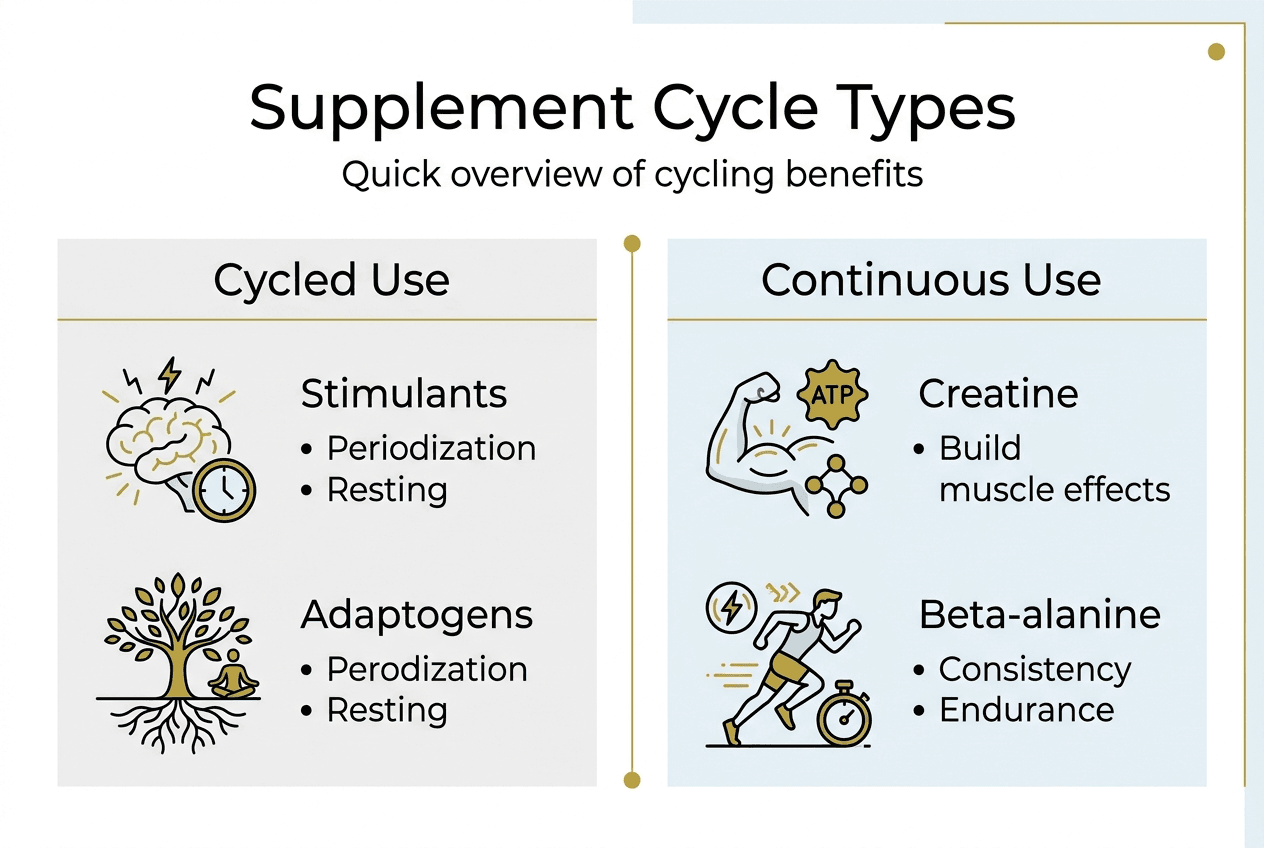
Not all supplements require cycling. Creatine typically does not require cycling but is debated; continuous use ensures saturation of muscle stores, which takes weeks to achieve. Beta-alanine, water-soluble vitamins, and omega-3 fatty acids also benefit from consistent use because they support ongoing physiological processes without causing tolerance. However, adaptogens like ashwagandha or rhodiola, stimulants such as caffeine, and fat-soluble vitamins including A, D, E, and K need strategic breaks to avoid diminishing returns or toxicity.
Common cycling strategies include 8 weeks on followed by 4 weeks off for fat-soluble vitamins, allowing your body to utilise stored reserves without excess buildup. For caffeine and adaptogens, a weekday protocol of 5 days on and 2 days off prevents tolerance while maintaining benefits during training. These protocols help optimise absorption, prevent receptor downregulation, and support long-term health.
Cycling adaptogens and stimulants is essential to maintain their effectiveness and prevent your body from adapting to their presence.
The advantages of cycling extend beyond tolerance prevention. By avoiding toxicity from fat-soluble vitamins and optimising absorption through periodic breaks, you protect your health while maximising supplement efficacy. Cycling also aligns with training periodisation, allowing you to match supplement use with high-intensity phases and recovery periods. Understanding why cycle supplements for performance and recovery helps you make informed decisions about which products to rotate and which to maintain continuously.
Supplements requiring cycling vs continuous use:
- Cycle required: adaptogens, caffeine, fat-soluble vitamins, pre-workouts with stimulants
- Continuous use: creatine, beta-alanine, omega-3s, water-soluble vitamins, protein powder
Expert debate continues around creatine cycling. Some argue breaks allow natural creatine production to recover, while research supports continuous use for maintaining muscle saturation. Individual responses vary, so monitoring your performance and tolerance guides the best approach. For detailed guidance, explore this bodybuilding supplement cycling guide to understand which supplements fit your goals.
Preparing to plan your supplement cycles
Before executing cycles, proper preparation ensures you maximise benefits and avoid common mistakes. Planning steps include categorising supplements, aligning with training phases, tracking effects, and using cycling protocols like 4-8 weeks on/2 weeks off. This structured approach transforms random supplement use into a strategic system that supports your performance goals.
Step 1: Categorise your supplements
List every supplement you currently use and divide them into two groups: those requiring cycling and those for continuous use. Adaptogens, stimulants, and fat-soluble vitamins go into the cycling category. Creatine, beta-alanine, omega-3s, and water-soluble vitamins remain in continuous use. This categorisation forms the foundation of your cycling plan and prevents confusion about which products need breaks.
Step 2: Align cycles with training goals
Match your supplement cycles to specific training phases for optimal results. During hypertrophy phases, maintain creatine and beta-alanine while cycling adaptogens to support stress management. In recovery or deload weeks, consider pausing stimulants to allow your nervous system to reset. Aligning cycles with periodised training ensures supplements support your body’s changing demands rather than working against them. Learn more about choosing supplements for performance to match your training phases.

Step 3: Track effects and tolerance signs
Monitoring how supplements affect your performance, mood, and recovery provides essential feedback for adjusting cycles. Using weekday protocols such as 5 days on/2 days off works well for caffeine and adaptogens, allowing you to observe changes during rest days. Keep records of energy levels, workout intensity, sleep quality, and any side effects to identify patterns indicating tolerance or effectiveness loss.
Tools to help track your cycles:
- Supplement tracking apps that log daily intake and effects
- Training journals noting performance changes
- Biomarker tests for vitamin levels and health indicators
- Calendar reminders for cycle transitions
Pro Tip: Review your cycles every 8-12 weeks based on personal response and training changes. What works during a strength phase may need adjustment during endurance training or cutting periods. Regular reviews ensure your supplement strategy evolves with your goals.
Common cycling protocols provide starting points, but individual responses determine the best schedule. A 4-8 week on period followed by 2-4 weeks off suits most fat-soluble vitamins and adaptogens. Weekday cycles of 5 days on and 2 days off prevent stimulant tolerance while maintaining training intensity. For comprehensive planning guidance, explore this supplement rotation schedule guide to structure your approach. Understanding supplement safety tips ensures your cycling plan protects your health while enhancing performance.
How to execute your supplement cycles effectively
Executing cycles requires clear protocols and consistent monitoring to maintain effectiveness. Effective cycling strategies include weekday protocols and on/off periods tailored to supplement type, ensuring you prevent tolerance while supporting performance goals.
Step 1: Establish your cycle schedule
Choose a primary cycling pattern based on your supplement categories. For fat-soluble vitamins and adaptogens, implement a 4-8 week on period followed by 2-4 weeks off. This extended cycle allows sufficient time to experience benefits while preventing accumulation or tolerance. Mark cycle start and end dates in your calendar, setting reminders for transitions to avoid accidentally extending use periods.
Step 2: Apply weekday protocols for stimulants
Caffeine and other stimulants respond well to shorter cycling patterns. Use supplements 5 days per week, typically Monday through Friday, then take 2 days off during weekends. This pattern prevents receptor downregulation while maintaining training intensity during your primary workout days. Adaptogens can follow the same weekday protocol, giving your stress response system regular breaks to maintain sensitivity.
Step 3: Maintain continuous use for saturation supplements
Creatine and beta-alanine require consistent daily use to maintain muscle saturation levels that take weeks to achieve. Interrupting use causes these levels to drop, requiring another loading period to restore benefits. Unless you experience unusual side effects or have specific reasons to cycle, keep these supplements in your daily routine throughout training phases. Research supports continuous use for optimal performance enhancement.
| Supplement Type | Cycle Length | Off Period | Primary Benefit |
|---|---|---|---|
| Fat-soluble vitamins | 8 weeks | 4 weeks | Prevents toxicity, maintains absorption |
| Adaptogens | 6 weeks | 2 weeks | Resets stress response sensitivity |
| Caffeine | 5 days | 2 days | Prevents tolerance, maintains alertness |
| Creatine | Continuous | None | Maintains muscle saturation |
| Beta-alanine | Continuous | None | Sustains muscle buffering capacity |
Step 4: Monitor tolerance signs and adjust
Watch for indicators that tolerance is developing: fading effects despite consistent use, needing higher doses for the same results, or experiencing withdrawal symptoms during off days. These signs suggest your current cycle may need shortening or your off period extending. Adjust protocols based on individual response rather than rigidly following generic schedules.
Pro Tip: Combine cycles with training periodisation for optimal performance peaks. Schedule your on periods to coincide with high-intensity training blocks and off periods with deload weeks. This synchronisation supports your body’s recovery needs while maximising supplement effectiveness during demanding training phases.
Cycling caffeine and adaptogens prevents the common problem of escalating doses to maintain effects. By taking regular breaks, you allow receptors to regain sensitivity, ensuring standard doses continue delivering benefits. This approach protects your health, saves money, and maintains long-term effectiveness. For guidance on combining supplements safely, learn how to stack supplements safely to enhance your cycling strategy.
Verifying results and troubleshooting supplement cycles
Tracking progress and identifying issues ensures your cycling plan delivers intended benefits. Individual responses vary; monitor fading effects, withdrawal symptoms, or dose creep as signs tolerance develops. Systematic tracking reveals patterns that guide adjustments for optimal results.
Signs indicating tolerance or the need for adjustment:
- Effects diminish despite consistent dosing and timing
- You feel compelled to increase doses for previous results
- Withdrawal symptoms appear during off periods
- Sleep quality declines or anxiety increases
- Physical performance plateaus or regresses
Ways to track supplement effects:
- Monitor mood stability and stress resilience daily
- Record energy levels before and after workouts
- Track recovery time between training sessions
- Schedule periodic blood tests for vitamin levels and health markers
- Note changes in body composition and strength gains
Systematic tracking transforms subjective feelings into objective data. When you notice fading effects, compare current performance to records from early in your cycle. Consistent decline suggests tolerance development, indicating you should transition to your off period earlier than planned. Conversely, sustained benefits throughout the planned cycle confirm your protocol works well for your physiology.
| Sign/Symptom | Recommended Action | Timeline for Change |
|---|---|---|
| Fading effects | Begin off period early | Immediate |
| Dose escalation urge | Maintain current dose, plan break | Within 1 week |
| Withdrawal symptoms | Gradual taper, extend off period | 2-3 days |
| Side effects appear | Pause immediately, consult professional | Immediate |
| Sustained effectiveness | Continue current protocol | No change needed |
Stacking considerations affect cycling decisions. Empirical data show co-supplementation of creatine and beta-alanine improves performance without added strength gains, supporting thoughtful stacking and cycling. When combining supplements, ensure cycling schedules do not conflict. For example, maintaining creatine continuously while cycling adaptogens creates no issues, but cycling multiple stimulants simultaneously may complicate tracking which substance causes specific effects.
Adjusting cycles to individual responses ensures safety and effectiveness. If standard protocols cause side effects or fail to deliver benefits, modify on/off periods until you find your optimal pattern. Some individuals need longer breaks, while others respond well to shorter cycles. Experimentation guided by careful tracking reveals your unique requirements. For additional guidance on monitoring responses, explore supplement response tracking tips to refine your approach.
Consult qualified professionals if you experience adverse reactions, struggle to identify tolerance patterns, or have underlying health conditions affecting supplement metabolism. Registered dietitians, sports nutritionists, and physicians provide personalised guidance that generic protocols cannot match. Professional input becomes especially valuable when stacking multiple supplements or managing complex training periodisation. Understanding how your body responds through this creatine and beta-alanine study helps inform evidence-based decisions.
Explore supplement stacks and tools to support your cycles
Now that you understand how to plan and execute effective supplement cycles, finding quality products that align with your strategy becomes the next step. Elevate Supplements offers carefully formulated stacks designed to support performance and recovery within structured cycling plans. The Perform Recovery Stack combines ingredients that enhance muscle repair and reduce fatigue, fitting seamlessly into your on periods when training intensity peaks.
For those focusing on metabolic efficiency during cycles, the Fuel Utilisation Stack provides targeted support for energy production and nutrient partitioning. These stacks eliminate guesswork about combining supplements, offering pre-formulated options that work synergistically. Whether you need continuous-use products like creatine or cyclable adaptogens, shop Elevate Supplements to find options supporting your cycling strategy. With fast UK delivery, trusted reviews, and expert formulations, you gain access to quality supplements that enhance your carefully planned cycles.
FAQ
How often should you cycle supplements?
Cycling frequency depends on supplement type. Fat-soluble vitamins typically follow 8 weeks on and 4 weeks off, while stimulants like caffeine work well with 5 days on and 2 days off. Adaptogens usually need 6-8 weeks on followed by 2-4 weeks off. Adjust these protocols based on your individual tolerance and training phases for optimal results.
Do all supplements require cycling?
No, not all supplements need cycling. Creatine and beta-alanine benefit from continuous use to maintain muscle saturation levels. Water-soluble vitamins, omega-3 fatty acids, and protein powder also work best with consistent daily intake. Only adaptogens, stimulants, and fat-soluble vitamins typically require structured cycling to prevent tolerance or toxicity.
How do I know if I should adjust my cycle?
Monitor for tolerance signs like fading effects or needing higher doses to achieve previous results. Withdrawal symptoms during off periods or declining performance despite consistent use also indicate adjustment needs. Track your response systematically and modify on/off periods based on observed patterns rather than rigid schedules.
Can cycling improve supplement absorption?
Yes, cycling fat-soluble vitamins helps avoid buildup in tissues and supports optimal absorption. Taking breaks allows your body to utilise stored reserves without excess accumulation that can lead to toxicity. This approach maintains effectiveness while protecting long-term health, ensuring supplements continue delivering benefits without diminishing returns.
Is it safe to stack supplements during cycles?
Yes, combining supplements like creatine and beta-alanine is supported by research for enhanced performance. Ensure cycling schedules do not conflict when stacking multiple products. Maintain continuous use for saturation supplements while cycling adaptogens or stimulants separately. This approach maximises benefits while simplifying tracking and reducing the risk of adverse interactions.
Recommended
- Why cycle supplements for performance and recovery in 2026 – Elevate Supplements
- How to Choose Supplements for Peak Performance Results – Elevate Supplements
- Why choose premium supplements for peak fitness in 2026 – Elevate Supplements
- Why stack supplements for peak performance and recovery – Elevate Supplements

