
Top supplement trends in 2026: boost your fitness now


TL;DR:
- The supplement industry in 2026 emphasizes scientifically supported ingredients like creatine and multi-benefit protein blends. Personalized nutrition using AI and biomarkers is emerging but remains limited and costly. Gut health, longevity ingredients, and foundational health supplements are gaining importance for overall performance and recovery.
The supplement industry is growing faster than most people realise. With the global protein market projected to reach £41.7 billion by 2030, the sheer scale of innovation means what worked for athletes three years ago may already be outdated. In 2026, the most effective supplement strategies are built on emerging science, smarter formulations, and a clearer understanding of what your body actually needs. Whether you’re chasing a new personal best or simply want to feel better and recover faster, this guide breaks down the trends that genuinely matter and the ones you can safely ignore.
Table of Contents
- Creatine redefined: beyond muscle gains
- Protein evolution: multi-benefit blends and plant-based gains
- Personalised nutrition: AI, biomarkers and tailoring for performance
- Gut health and longevity: the next frontier in supplements
- Our view: what truly matters with supplement trends in 2026
- Elevate your routine with evidence-backed supplements
- Frequently asked questions
Key Takeaways
| Point | Details |
|---|---|
| Creatine is still king | Evidence overwhelmingly supports creatine for performance, cognitive benefits, and recovery in 2026. |
| Protein blends advance | Modern protein supplements now target weight management, satiety, and sustainable recovery for all fitness levels. |
| Personalisation rises | AI and biomarker-based supplements are gaining popularity but remain best used alongside proven basics. |
| Gut and longevity matter | Health-focused ingredients like fibre, NMN, and mushrooms promote foundational wellness and lasting results. |
| Prioritise evidence | Athletes get the best results by favouring science-backed staples and supplementing with proven routines. |
Creatine redefined: beyond muscle gains
For decades, creatine was the go-to for building muscle and lifting heavier. In 2026, that reputation has expanded significantly. Over 1,000 studies now support creatine for performance, cognition, and recovery, making it one of the most thoroughly researched compounds in sports nutrition. It is no longer just for bodybuilders.
What makes creatine so relevant today is its breadth of application. Endurance athletes use it to buffer fatigue. Recreational gym-goers rely on it for faster recovery between sessions. Increasingly, researchers are exploring its role in mental energy and focus, particularly under high cognitive load or sleep deprivation. The creatine benefits explained go well beyond the weight room.
| Benefit | Evidence level | Who benefits most |
|---|---|---|
| Strength and power | Very strong | Strength athletes, sprinters |
| Cognitive function | Moderate to strong | All athletes, especially under fatigue |
| Recovery speed | Strong | Endurance and team sport athletes |
| Repeated sprint output | Strong | Team sport and HIIT trainees |
Timing and pairing matter more than many realise. Combining creatine with carbs and protein boosts repeated sprint power by 5 to 10%, which is a meaningful edge in competitive settings. The uptake mechanism is enhanced by insulin, so post-workout meals are an ideal window.
“Creatine is no longer a niche bodybuilding supplement. It is a foundational compound for anyone serious about sustained physical and mental performance.” — Sports nutrition researchers, 2026
Pro Tip: If you are new to creatine, skip the loading phase. A consistent daily dose of 3 to 5 grams is just as effective over time and causes far less gastrointestinal discomfort. Pair it with your post-workout shake for best results.
For those focused on recovery, pairing creatine with targeted muscle recovery supplements creates a stack that addresses both the performance and repair sides of training.
Protein evolution: multi-benefit blends and plant-based gains
With creatine setting a proven foundation, protein supplements are the next major area of evolution. The protein supplement market grew from $24.1 billion in 2023 and is projected to reach $41.7 billion by 2030, with plant-based options capturing a growing share of that expansion. Consumers in 2026 are not just buying protein for muscle. They want satiety, blood sugar regulation, sustained energy, and digestive support all in one product.

This has driven a wave of multi-ingredient blends that combine whey or plant proteins with fibre, electrolytes, and digestive enzymes. These formulations are designed to do more work per scoop. They slow digestion, moderate glucose response, and keep you fuller for longer, which matters enormously if you are training hard and managing body composition simultaneously.
Key features to look for in a 2026 protein blend:
- Complete amino acid profile (all nine essential amino acids present)
- Added fibre for satiety and gut support
- Low sugar content with natural sweeteners
- Electrolytes for hydration during recovery
- Digestive enzymes for improved absorption
Plant-based proteins have addressed their biggest historical weakness: completeness. Single-source options like pea or rice protein still fall short on certain amino acids, but blended plant proteins now rival whey in terms of muscle protein synthesis when dosed correctly. Athletes concerned about amino acids for muscle health should look for blends combining pea, brown rice, and hemp for a full spectrum.
| Protein type | Amino acid completeness | Digestibility | Best for |
|---|---|---|---|
| Whey concentrate | High | High | Post-workout recovery |
| Whey isolate | Very high | Very high | Lean muscle, low lactose |
| Blended plant protein | High (when blended) | Moderate to high | Vegans, holistic wellness |
| Single-source plant | Moderate | Moderate | Budget, not ideal solo |
Pro Tip: If you are using a metabolism booster stack, pairing it with a high-fibre protein blend can amplify satiety and support fat loss without sacrificing muscle.
Personalised nutrition: AI, biomarkers and tailoring for performance
While protein and creatine have broad application, new technologies now enable more individualised strategies. 29% of users are already influenced by tailored supplement recommendations driven by AI apps that adapt to sleep, training load, and dietary data. This is not a distant future concept. It is happening now.
Wearables and nutrition apps are increasingly integrating genetics, microbiome analysis, and real-time fitness tracking to generate personalised supplement protocols. Someone training for a marathon while managing poor sleep and a high-stress job will receive a very different recommendation than a strength athlete with optimal recovery metrics. AI and omics technology are the engines driving this shift.
The 4Ps framework for supplement timing:
- Personalise your stack based on your training type, health markers, and goals
- Periodise your supplements to align with training blocks and recovery phases
- Prefuel strategically with the right compounds before key sessions
- Prepare your body with foundational supplements year-round
Stat: Athletes who follow periodised supplement plans report up to 18% better adherence and more consistent performance outcomes compared to those using static protocols.
However, it is worth being honest about the limitations. Personalised nutrition technology is promising but still early. Reliability and reproducibility vary significantly between platforms, and access remains limited for most everyday athletes. Cost is a real barrier. Understanding personalisation trends in nutrition is useful, but do not abandon proven staples in favour of a costly algorithm-driven stack that lacks long-term evidence.
For those ready to structure their approach, planning supplement cycles is a practical starting point that does not require expensive technology.
Pro Tip: Use wearable data to identify your weakest recovery windows, then target those periods with specific supplements like magnesium or adaptogens rather than overhauling your entire routine.
Gut health and longevity: the next frontier in supplements
Beyond macronutrients and AI, supporting the body’s foundation and recovery matters more than ever. In 2026, fibre, medicinal mushrooms, and NMN are seeing increased adoption for foundational health, and the science behind each is becoming more compelling by the month.
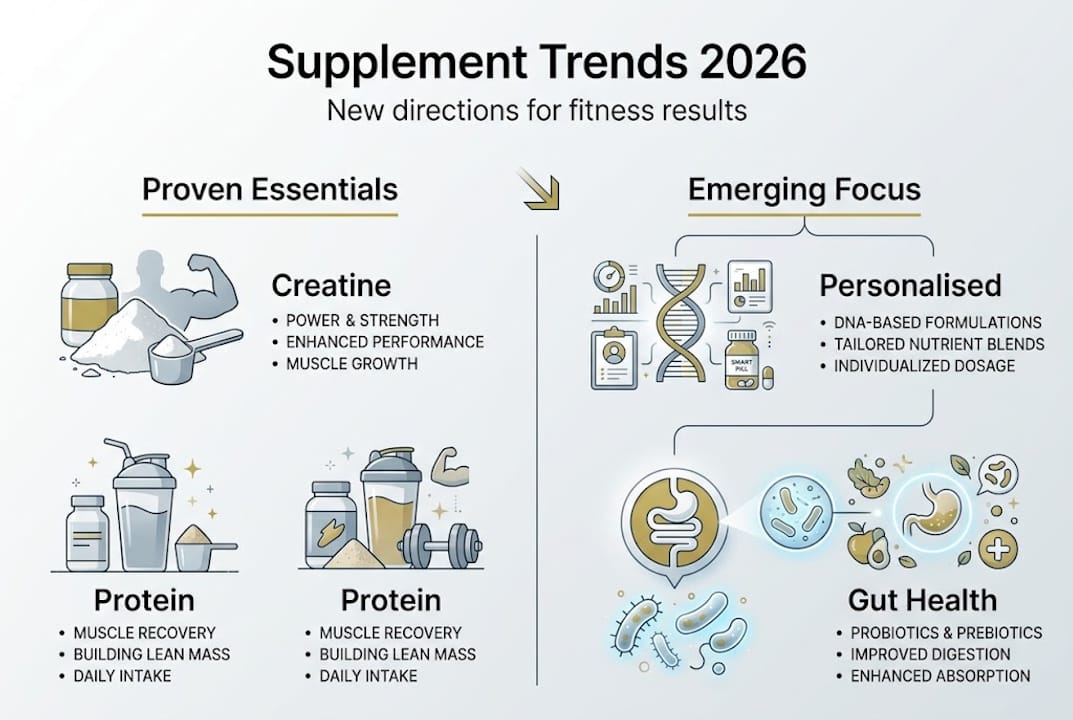
Gut health has moved from a wellness buzzword to a recognised performance factor. A healthy gut microbiome improves nutrient absorption, reduces systemic inflammation, and supports immune function. All three of those outcomes directly affect how well you train and recover. Prebiotics and probiotics are now standard inclusions in many athlete supplement protocols, not just general wellness routines.
Trending gut health and longevity ingredients in 2026:
- Prebiotics and probiotics: Support microbiome diversity and reduce inflammation
- Soluble fibre: Moderates blood sugar, improves satiety, feeds beneficial gut bacteria
- NMN (nicotinamide mononucleotide): Supports cellular energy production and anti-ageing pathways
- Medicinal mushrooms (lion’s mane, reishi, cordyceps): Linked to cognitive support, immune function, and endurance
- Adaptogens (ashwagandha, rhodiola): Help regulate cortisol and support stress resilience
“The most exciting shift in 2026 is athletes treating gut health as a performance variable, not just a comfort issue. Microbiome support is now part of serious training programmes.” — Sports nutrition commentary, 2026
NMN in particular has attracted serious attention. It supports NAD+ production, a molecule central to cellular energy and repair. While long-term human data is still accumulating, early findings are encouraging for both recovery and healthy ageing. Mushroom blends, especially cordyceps, have shown genuine promise for oxygen utilisation and endurance capacity.
For athletes who want to ensure their ingredients meet the standards these trends demand, understanding supplement quality for athletes is essential before committing to any new product. The health industry supplement trends shaping 2026 reflect a broader shift towards longevity-focused, whole-body performance thinking.
Our view: what truly matters with supplement trends in 2026
After reviewing these trends, it is worth stepping back and asking a harder question: how much of this actually moves the needle for the average athlete?
Our honest answer is that creatine and protein consistently outperform newer, less-proven blends in real-world outcomes. The excitement around AI personalisation and exotic mushroom stacks is understandable, but most fitness results still come from a handful of well-studied staples used consistently over time. Novelty is not the same as efficacy.
What we find genuinely promising in 2026 is the integration of gut health into performance thinking and the broadening of creatine’s applications beyond muscle. These are evidence-led shifts, not marketing cycles. NMN and adaptogens show real potential, but they work best as additions to a solid foundation, not replacements for it.
The uncomfortable truth is that most athletes would see better results from improving sleep, managing stress, and cycling supplements effectively than from chasing the latest trend. Technology is a useful tool. Use it to sharpen what already works, not to replace the unglamorous basics that drive genuine progress.
Elevate your routine with evidence-backed supplements
Ready to take the guesswork out of your supplement routine? At Elevate Supplements, we stock the products that align with what the science actually supports in 2026. Whether you are looking for pure creatine monohydrate to support strength and cognition, or a premium whey protein blend formulated for recovery and satiety, our range is built around transparency and efficacy.
We offer fast UK and Ireland delivery, free shipping on orders over £100, and 24/7 customer support. Every product in the Elevate Supplements is chosen to meet the demands of serious athletes and health-conscious individuals who want results, not just promises. Explore our full range and build a stack that works as hard as you do.
Frequently asked questions
What supplements are most effective for athletes in 2026?
Creatine and protein remain the most scientifically supported choices for strength, recovery, and overall wellness, consistently outperforming newer and less-studied alternatives.
Is plant-based protein as useful as whey?
Plant-based proteins require careful blending to achieve completeness, but well-formulated blends combining pea, rice, and hemp can match whey for muscle protein synthesis.
How accurate is personalisation in supplements?
AI and omics personalisation shows genuine promise for tailoring supplement plans, but reliability and scalability are still inconsistent across platforms for most mainstream athletes.
Which new ingredients are worth trying in 2026?
Fibre, medicinal mushrooms, and NMN are among the most credible emerging ingredients, each backed by growing evidence for foundational health, recovery, and longevity support.
Recommended
- How to plan supplement cycles for peak performance 2026 – Elevate Supplements
- Why supplement quality matters for athletes in 2026 – Elevate Supplements
- Why cycle supplements for performance and recovery in 2026 – Elevate Supplements
- Why recovery supplements matter for athletes in 2026 – Elevate Supplements

